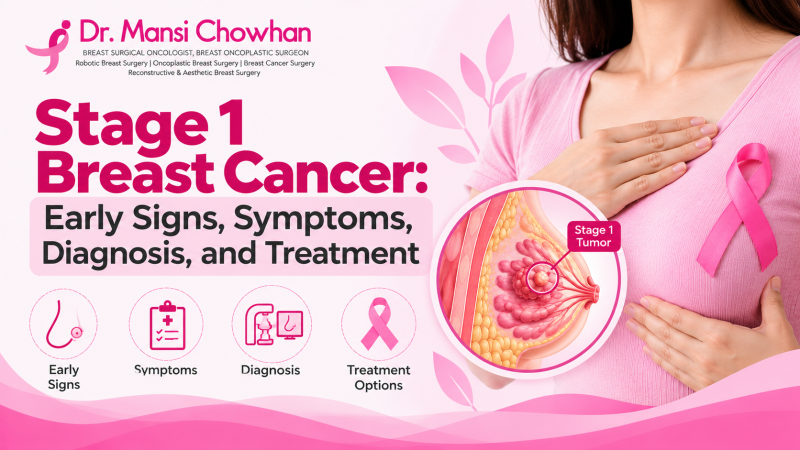




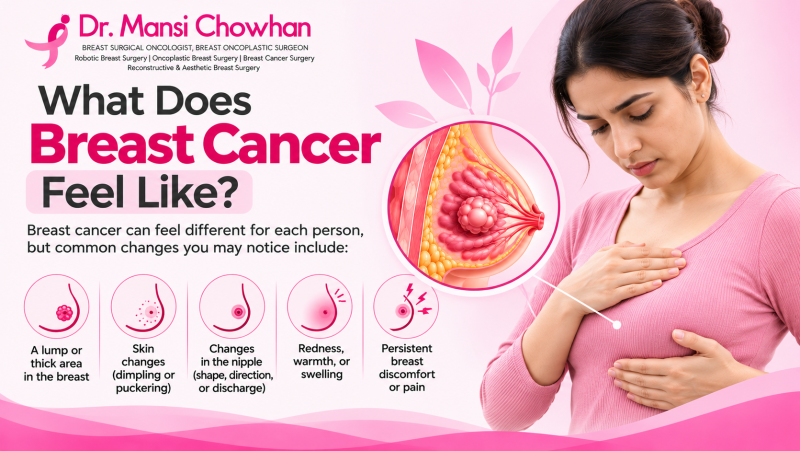
Breast cancer often feels like a distinct, firm, or hard lump or thickened area that feels noticeably different from the rest of your breast tissue. However, there is no single feel that applies to every case—many breast cancers are painless, some are too small to feel by touch at first, and others cause changes in skin texture or shape rather than a clear lump.
What Does a Breast Cancer Lump Feel Like?
A breast cancer lump often feels different from the surrounding breast tissue. It may be:
- Hard or firm when touched.
- Irregular in shape, with uneven edges.
- Difficult to move under the skin.
- Painless, especially in the early stages.
- Present in one area of the breast or near the armpit.
However, these are not always constant characteristics. Some tumors can be either smooth, soft, or tender. Moving lumps should not be ignored, either.
It is crucial to emphasize the fact that the diagnosis of the disease cannot be made based on a breast lump only. The diagnosis needs an examination of the breast and appropriate tests.
Can Breast Cancer Be Painless?
Yes. Most women cannot feel the initial formation of breast cancer. There might be a lump in the breast without any pain. This is the reason why women cannot detect it easily.
Breast cancer is not responsible for the breast pain that women experience. The causes can be hormonal imbalances, breast cysts, or any other problem that is not associated with breast cancer.
However, if a specific part of the breast starts causing constant pain, especially if it accompanies other changes in the breast, you need to consult a physician.
What Other Breast Changes Can Be Signs of Cancer?
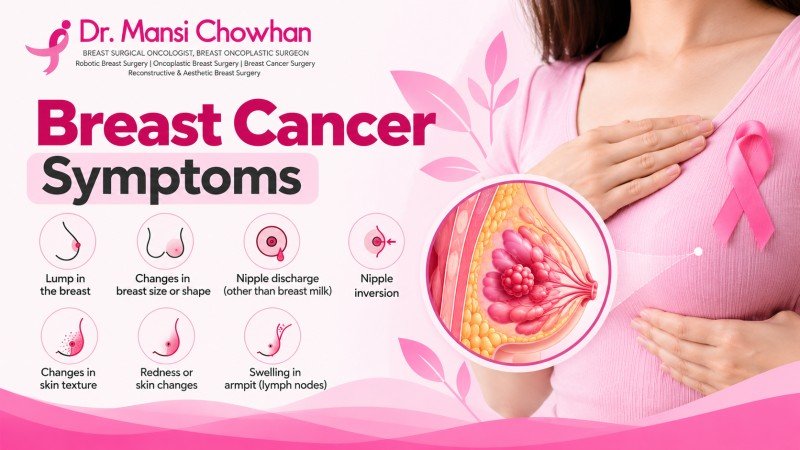
A lump is not the only possible sign of breast cancer. Some women first notice a change in the skin, nipple or overall shape of the breast.
1. Thickening of tissue
One area of the breast may feel thicker or firmer than the rest. Thickening tissue may not be easily distinguished from normal tissue.
2. Puckering or dimpling of skin
Skin of the breast may appear to be dimpled like the skin of an orange. Skin may also look folded or worn in.
3. Changes in breast size or shape
The breast may look swollen and feel firm. The skin of the breast may also lose its normal shape. Changes should be evaluated if they occur in only one breast.
4. Inward turning of nipple
A nipple that has previously been pointing outward should be checked if it begins to turn in.
5. Discharge from nipple
Fluid coming from the nipple without squeezing should be evaluated. Blood-stained discharge should be evaluated immediately.
6. Changes in skin of the breast
The skin of the breast may become red, flaky, thickened, or swollen. These skin changes may be caused by skin conditions and should be checked.
7. Swelling near the armpit
A lump or swelling under the arm may be related to enlarged lymph nodes. Sometimes, this can happen even before a breast lump becomes noticeable.
Can Breast Cancer Be Present Without a Lump?
Yes, some cases of breast cancer do not manifest themselves with the formation of a lump that can be felt. For instance, some women may have swelling or changes in the appearance of the skin or nipples.
That is why a healthy-feeling breast does not necessarily mean there is no problem. Mammograms are known to detect breast cancer even when a woman has not noticed any changes.
All women should adhere to the recommended screening guidelines depending on age and risk factors, among other things. Any woman noticing a change in her breast must undergo further investigation, even after mammography.
How Does a Breast Cancer Lump Feel Different From a Normal Breast Lump?
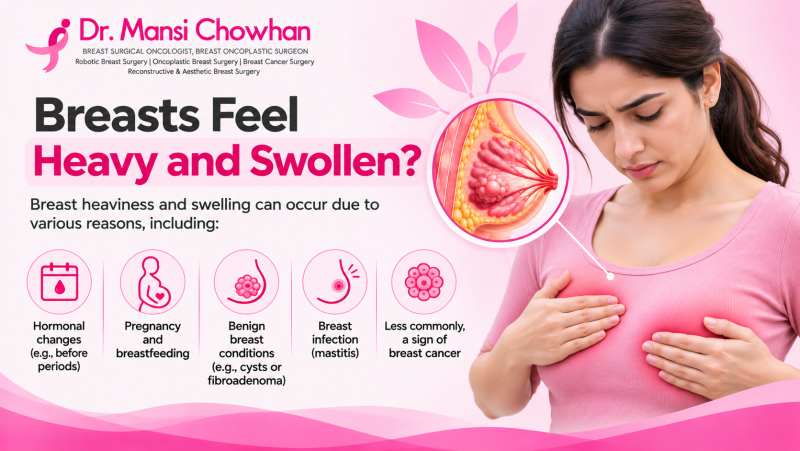
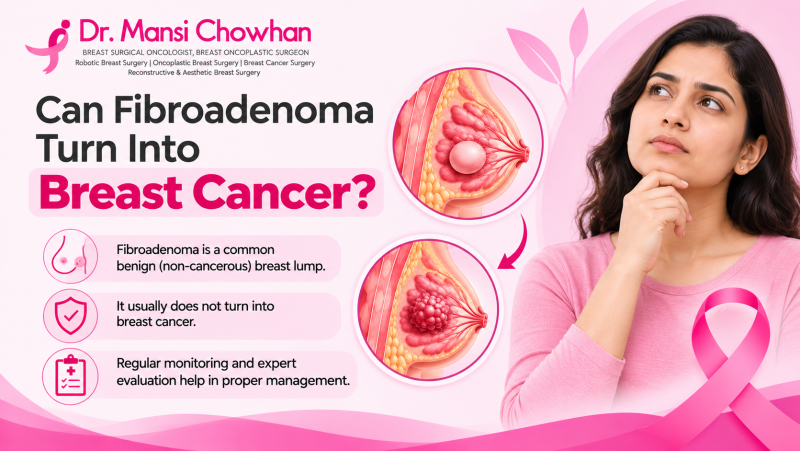
Breast lumps can develop for several reasons. Fibroadenomas, cysts, and hormonal changes are common non-cancerous causes.
Some differences may help explain why a lump needs attention, but they cannot confirm its nature.
Feature | Possible breast cancer lump | Common benign breast lump |
| Feel | May feel hard or firm, but can also be soft | May feel smooth, soft or firm |
| Shape | Can have irregular edges | Often has a more regular shape |
| Movement | May feel fixed, but not always | May move more easily under the skin |
| Pain | Often painless, but pain is possible | May be painful or tender |
| Changes over time | May grow or cause other breast changes | May remain stable or change with hormones |
There is no reliable way to identify cancer just by comparing how a lump feels. Even a smooth, movable and painless lump needs proper assessment if it is new.
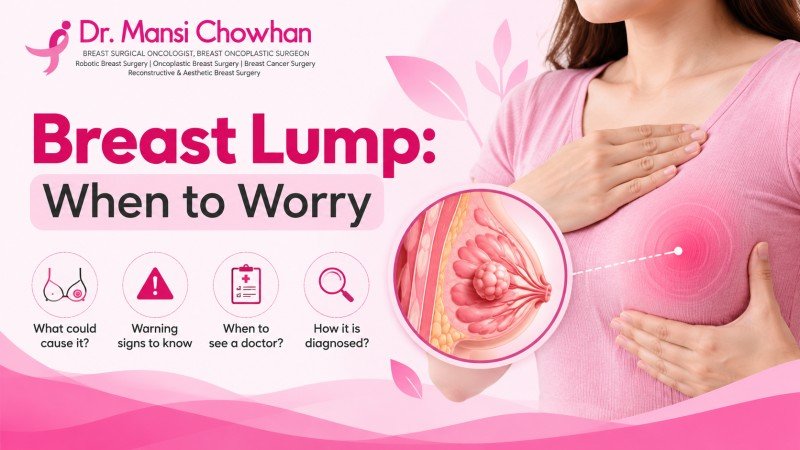
When Should a Breast Lump Be Checked?
A woman should arrange a medical examination if she notices:
- A new lump in the breast or armpit.
- A thick or firm area that was not present before.
- A change in breast shape or size.
- Skin dimpling, puckering or persistent redness.
- A nipple that suddenly turns inward.
- Bloody or unusual nipple discharge.
- Breast or nipple changes that do not settle.
It is better to get a new change checked rather than wait for it to become painful or larger. Most breast lumps are not cancer, but testing is the only way to understand the cause.
How Do Doctors Check Whether a Breast Lump Is Cancer?
Doctors will ask when and how the change occurred and if it has grown or changed. The doctor will then perform a clinical breast exam to check the breast and surrounding area, including the armpit.
From these exams and tests, doctors may suggest the following:
Breast ultrasound: Ultrasound uses sound waves to evaluate the lump to determine if it is solid or fluid-filled.
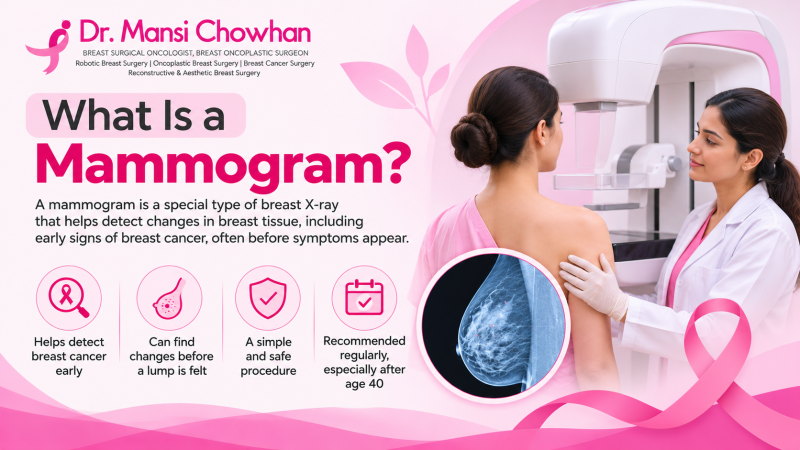
Mammogram: Low-dose X-rays of the breast are used to evaluate any abnormal changes. These may be recommended for women over a certain age depending on the examination findings.
Core needle biopsy: May be recommended if there are abnormal areas shown on imaging. Here, a small sample of tissue is removed and looked at to determine if there is cancer present.
Not all lumps require all of these tests. This is up to the judgment of the doctor based on examination, imaging, and other tests.
Expert Breast Care and Surgical Treatment with Dr. Mansi Chowhan
If you have noticed a breast lump or an unusual change in your breast, consulting an experienced breast specialist can help you understand the next steps. Dr. Mansi Chowhan, Breast Oncoplastic Surgeon, provides specialised evaluation and surgical care for breast conditions, with treatment recommendations based on the diagnosis and individual needs.
Her breast surgery services include procedures such as breast lump excision, breast conservation surgery, radio-guided breast surgery, therapeutic mammoplasty, modified radical mastectomy, and breast reconstruction. The appropriate approach depends on the nature of the breast condition and the findings of the clinical assessment.
Related Treatments
- Breast Lump Excision
- Breast Conservation Surgery
- Radio-Guided Breast Surgery
- Therapeutic Mammoplasty
- Modified Radical Mastectomy
- Breast Reconstruction
Conclusion
Breast cancer does not have one fixed feel. There can be a lump that is either hard or soft, painless or tender. Breast cancer may not even form a lump. It is better to find any changes that you see or feel in the breast than try to identify the cancer with your fingers. Anything that is abnormal should be assessed by a breast expert. Dr. Mansi Chowhan is a well-experienced oncoplastic breast surgeon having more than 15 years of experience in her field.
Frequently Asked Questions
1. Does a lump of breast cancer feel painful when pressed?
No, a lump of breast cancer does not always hurt. Sometimes, it may hurt or be tender, but pain or the absence of it cannot be used as a sure criterion of whether there is cancer or not.
2. Does a breast cancer lump feel like a small stone?
Yes, a breast cancer lump may have the consistency of a stone, though it does not always happen this way.
3. Can breast cancer feel like a thick place instead of a lump?
Yes, breast cancer sometimes manifests itself in the form of thickening in one area of the breast.
4. Does breast cancer cause itching on the breast?
Itching can be a symptom of some breast problems, including breast cancer. The presence of itching in conjunction with redness, scaly skin, changes in the nipples, or thickening of the skin must be reported to the doctor.
5. Does breast cancer happen close to the armpit?
Yes. Breast tissue extends toward the armpit, and breast cancers may occur in this region. Any swelling or lump found near the armpit region could be associated with the surrounding lymph nodes.
6. Can a normal mammogram rule out breast cancer completely?
No. Mammography is a good way to detect breast abnormalities, but it cannot detect all breast cancers.