

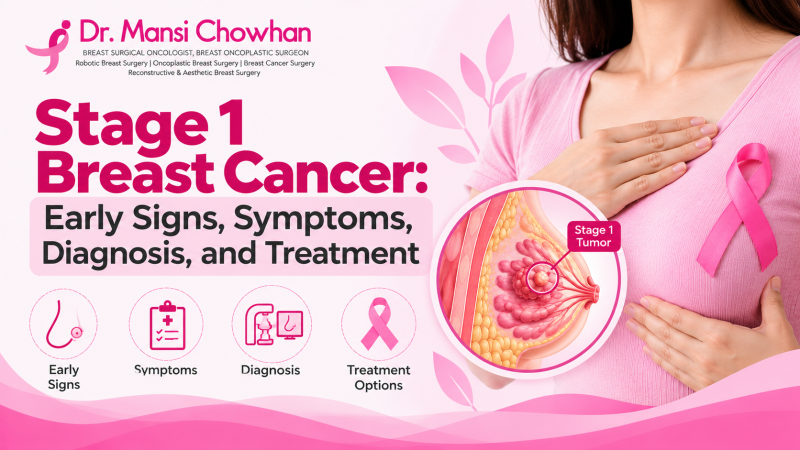
Stage 1 breast cancer is an early-stage, invasive disease where the tumor is small (up to 2 centimeters) and either has not spread to the lymph nodes or has only tiny clusters of cancer cells in them.
What Is Stage 1 Breast Cancer?
Stage 1 breast cancer is the early form of breast cancer. The breast cancer is relatively small, and it has not yet spread to distant organs in the body. However, in some cases, the breast cancer cells may be detected in a lymph node near the breast.
Lymph nodes are glands in the body responsible for fighting infections. They are found in several places in the body, including under the armpit where they are close to the breast.
Stage 1 breast cancer is divided into two groups:
Stage 1A: The size of the tumor is usually less than 2 cm, and it has not spread to the nearby lymph nodes, except in very small areas of spread that are covered by the staging rules.
Stage 1B: Small groups of cancer cells may be found in nearby lymph nodes, even when there is no lump in the breast or the breast tumor is small.
However, the stage of the tumor can be a bit more specific than this. The medical team will also consider the grade of the cancer, as well as tests on the hormone receptors and HER2. This information helps determine how the cancer will act and what treatments are effective.
What Are the Early Signs and Symptoms of Stage 1 Breast Cancer?
Stage 1 breast cancer does not always cause noticeable symptoms. Some women find a small lump, while others feel completely normal and learn about the cancer after a breast test.
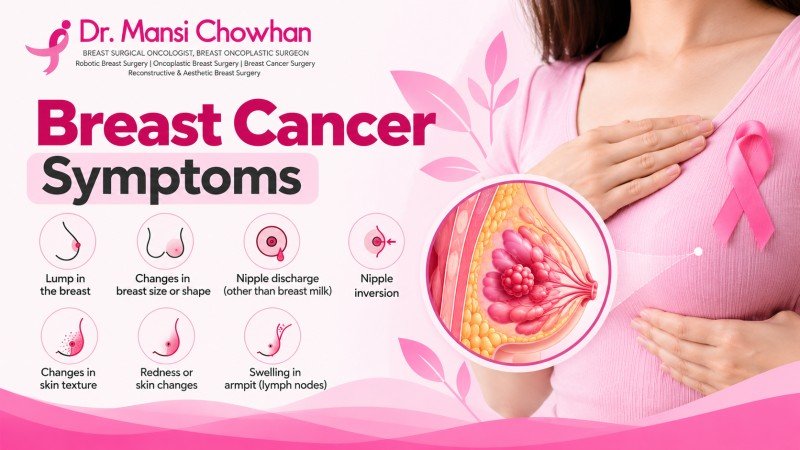
Changes worth checking include:
- A new lump in the breast or armpit.
- A part of the breast that feels thicker or harder than usual.
- A change in the size or shape of one breast.
- Skin that looks pulled inward or has small dents.
- A nipple that has recently turned inward.
- Blood or unusual fluid coming from the nipple without squeezing it.
A lump caused by cancer is not always painful. In fact, some women feel no discomfort at all.
This does not mean that just because these symptoms are observed, there must be a case of cancer. Other things like cysts and infection in the breasts can also lead to these changes. Any sign that is new or unusual should be diagnosed rather than finding out its cause on one's own.
There is one more aspect that needs to be mentioned here: early stages of breast cancer can lack symptoms entirely.
How Is Stage 1 Breast Cancer Diagnosed?
Finding a lump does not tell a doctor whether it is cancer. A few tests may be needed to get a clear answer.
Breast Examination
The doctor checks both breasts and the areas under the arms. They may ask when the change first appeared and whether there is a family history of breast cancer.
Mammogram or Ultrasound
A mammogram is an X-ray test done on the breast. An ultrasound test is an imaging test that employs the use of sound waves to visualize what is inside the breast tissue.
These tests are capable of showing the size and location of the suspicious region, although they cannot always tell whether it is cancerous or not.
Breast Biopsy
In case a suspicious area is detected, a small amount of tissue may be taken from the body by performing a biopsy. The obtained tissue will then be tested in the laboratory for the presence of cancerous cells.
Once the cancer is detected, the results of additional tests will show the kind of breast cancer. The doctors will determine whether the cancer is sensitive to hormones and has high amounts of the protein called HER2. This information can be useful for the treatment process.
The stage of the disease is defined based on the testing results, the size of the tumor, and the lymph nodes involved.
What Are the Treatment Options for Stage 1 Breast Cancer?
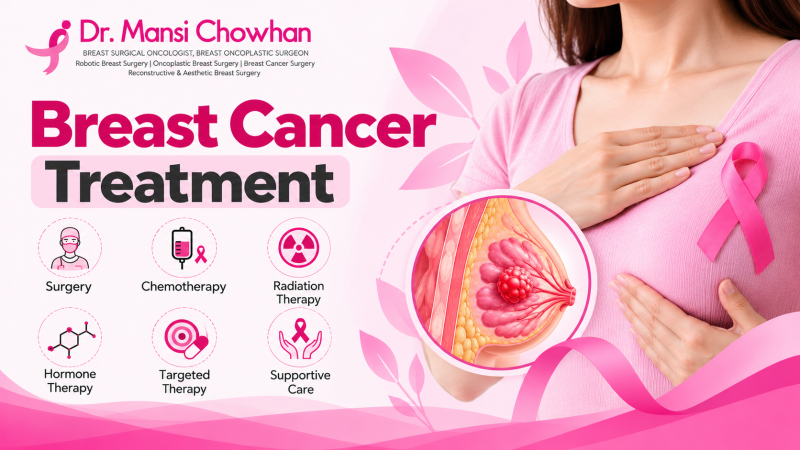
Most women with Stage 1 breast cancer need surgery. Other treatments may be added to lower the chance of the cancer coming back. The plan is based on the test results, not just the stage.
Here is a simple look at the main treatment options.
Treatment | What it does |
| Breast-conserving surgery | Removes the cancer and a small amount of nearby tissue while keeping most of the breast. |
| Mastectomy | Removes the whole breast when this is the more suitable option. |
| Radiation therapy | Uses high-energy rays to kill cancer cells left in the treated area. |
| Hormone therapy | Helps stop hormone-sensitive cancer cells from growing. |
| Chemotherapy | Uses medicines to kill cancer cells. It is needed for some patients, but not everyone. |
| Targeted therapy | Uses medicines that act on certain features of cancer cells, such as the HER2 protein. |
Not every woman needs all these treatments. Some may need surgery and radiation, while others may also need hormone therapy or other medicines.
Is Surgery Always Needed for Stage 1 Breast Cancer?
In the case of Stage 1 breast cancer, surgery is usually the primary treatment. Depending on the size and location of the cancer, patients may have more than one option when it comes to surgical treatment.
Breast-conserving Surgery: The goal of this procedure is to remove the cancer as well as a small amount of surrounding healthy tissue. Most of the breast remains after this surgery. Radiation is typically given after this surgery.
Mastectomy: The entire breast is removed. This may be the recommendation if the cancer is present in more than one area of the breast, or if the cancer is large in comparison to the breast.
In early-stage breast cancer, breast-conserving surgery may be an option in situations where mastectomy is recommended. Although removing the breast may not always be the best option, keeping the breast may not always be the best option as well. Survival rates following mastectomy and breast-conserving surgery with radiation therapy may be comparable in women with early-stage breast cancer.
Will Chemotherapy Be Needed?
Not all women with Stage 1 breast cancer receive a chemotherapy prescription.
A tumor's size and how quickly cancer cells are multiplying are factors the doctor considers along with what laboratory tests show. If the features of the cancer indicate that there is a risk it will return, and/or if certain cancer types are present, then chemotherapy will be considered.
There are some women for whom chemotherapy is not prescribed. Other medicines may be prescribed, and the decision to forgo chemotherapy will be based on the results of all of the tests.
When Is Hormone Therapy Used?
Some breast cancers use hormones such as oestrogen to grow. If the cancer has hormone receptors, the doctor may recommend hormone therapy after surgery.
These medicines help lower the chance of the cancer returning. They are often taken for several years, and the choice of medicine depends on factors such as age and whether the woman has gone through menopause.
How Long Does Stage 1 Breast Cancer Treatment Take?
There is no single timeline for all patients.
The time between treatments may vary. Recovery from surgery may be followed by other treatment. The plan for the radiation treatment will determine how long it takes. Chemotherapy may be given in cycles. Hormone therapy may be long-term.
Your doctor may be able to tell you the approximate order of the treatments and how often you may need to be hospitalized. You can ask about other treatment-related matters such as going back to work and normal activities, and recovery from surgery. Ask before treatment to be able to make a plan.
Can Stage 1 Breast Cancer Come Back?
It is still possible for breast cancer to come back after treatment. This risk is different for everyone.
Some factors that influence the risk of breast cancer returning include the type of cancer you have, the grade of your cancer, the treatment you receive, and the results of the hormone and HER2 tests. The goal of your surgery and any treatment afterwards is to reduce the chance of your cancer coming back.
Appointments after your treatment are still important. It is always a good idea to tell your doctor about any new lumps or changes you feel near the area of your surgery. Any unusual symptoms of the breast deserve your doctor’s attention.
What Is Life Like After Stage 1 Breast Cancer Treatment?
Surviving cancer treatment comes with an array of feelings ranging from anxiety to exhaustion and relief. Some survivors will be back on their feet in a short period of time, whereas others require more time to recover.
Following surgery, one may experience pain and tightness in the breast and armpit. Depending on the course of treatment, which also includes radiation therapy and drugs, there may be other side effects to consider. Your medical team will guide you on how to cope with the changes.
Going to the follow-ups helps the doctor to assess your recovery process and to address any additional issues. You should not feel that you are supposed to handle the entire recovery process on your own.
Why Choose Dr. Mansi Chowhan?
Choosing a specialist experienced in breast cancer surgery can help patients understand their diagnosis and explore appropriate treatment options. Dr. Mansi Chowhan is a breast surgical specialist whose website highlights her expertise in breast oncoplastic surgery and breast cancer procedures.
As a Breast Oncoplastic Surgeon, Dr. Mansi Chowhan offers surgical care for selected breast conditions, with consideration of appropriate cancer removal and breast shape where clinically suitable.
Reasons to consider a consultation include:
- Breast cancer surgery expertise: Discussion of appropriate surgical options based on the diagnosis and investigation results.
- Breast conservation options: Assessment for breast-conserving surgery when clinically appropriate.
- Oncoplastic techniques: Consideration of breast reshaping techniques alongside cancer surgery when suitable.
- Reconstruction planning: Discussion of breast reconstruction options for patients undergoing mastectomy or other breast surgery.
- Individualised treatment planning: An opportunity to understand the proposed procedure, its potential benefits, risks, and alternatives.
Breast cancer treatment may also require coordination with medical and radiation oncologists. The most appropriate plan depends on the cancer subtype, stage, pathology results and the patient's individual circumstances.
Related Treatments
The following related procedures are services offered by Dr. Mansi Chowhan, as listed on her website:
- Breast Conservation Surgery
- Modified Radical Mastectomy
- Breast Reconstruction
- Therapeutic Mammoplasty
- Radio-Guided Breast Surgery
- Breast Lump Excision
Conclusion
Being diagnosed with Stage 1 breast cancer is scary; however, it is the first stage, and there are some good treatment methods available. Many women can opt for surgery where all of their breast, except for a few parts, is preserved, and additional treatment follows. To get more information about their diagnosis, they should see a breast specialist.
Dr. Mansi Chowhan, Expert Oncoplastic Breast Surgeon, is an experienced breast surgeon with more than 15 years of practice in surgical oncology. It will be beneficial for women to make a consultation appointment.
Frequently Asked Questions About Stage 1 Breast Cancer
Is it possible to cure breast cancer at Stage 1?
It is common for Stage 1 breast cancer to be successfully cured, and many women survive many years after the treatment of the disease. This will largely depend on the characteristics of the cancer, as well as the results of the treatment.
Does Stage 1 breast cancer necessarily manifest as a lump?
This is not always the case. Some patients may experience a small lump, while others have no symptoms. There will likely be a need for a mammogram to detect changes.
Can Stage 1 breast cancer metastasize?
There are no cases where stage 1 breast cancer metastasizes, since it is localized only in the breast. However, very tiny clusters of cancerous cells may appear in the nearby lymph nodes in some patients.
Will I lose my breast if I am suffering from Stage 1 breast cancer?
Not necessarily. Some women can undergo breast-conserving surgery, where the tumor is surgically removed, and only a part of the breast tissue is taken out. In some cases, the woman has to undergo mastectomy due to the site or the extent of the tumor.
Does it mean all women who suffer from Stage 1 breast cancer should take chemotherapy?
Not necessarily. There are instances where chemotherapy is necessary, but not in all cases.