




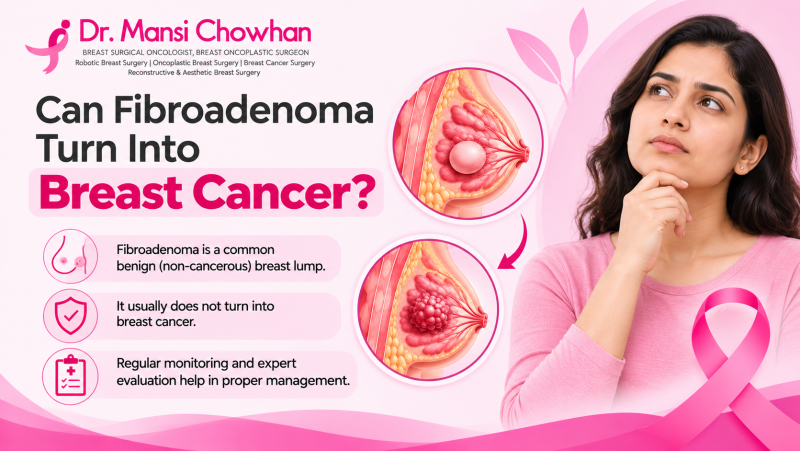
A breast fibroadenoma cannot turn into cancer in the vast majority of cases.
Fibroadenomas are benign (noncancerous) solid breast lumps made of glandular and fibrous tissue. They do not transform into breast cancer. However, finding cancer inside a fibroadenoma or developing breast cancer nearby can happen in very rare instances (less than 0.1% to 0.3% of cases).
Can a Fibroadenoma Become Cancerous?
Most of the time, no. An ordinary fibroadenoma is benign, meaning that the cells in the lump are not malignant; the tumor neither spreads to other parts of the body nor causes harm.
The risk of developing cancer from a fibroadenoma is very low. The risk is also dependent on the nature of the specimen found. Simple fibroadenomas do not raise the risk of having breast cancer, while complex fibroadenomas have been associated with a slight increase in the risk of developing cancer, especially when there are other abnormalities.
One distinction needs to be made here: A fibroadenoma rarely turns into cancer, but it does not mean that if you have a fibroadenoma, you will develop breast cancer; they are two different entities altogether.
What Is the Difference Between Simple and Complex Fibroadenoma?
Doctors classify fibroadenomas based on how the tissue looks under a microscope. This helps them understand the nature of the lump.
Type | What it means | Breast cancer risk |
| Simple fibroadenoma | The tissue has a uniform appearance without certain additional changes. | Does not appear to increase breast cancer risk. |
| Complex fibroadenoma | The tissue has additional features, such as small cysts, calcifications, or other changes. | May be linked with a slight increase in future breast cancer risk. |
A complex fibroadenoma is still a benign lump. The word “complex” does not mean cancer. It describes the tissue pattern seen during examination.
Doctors also look for other findings, such as atypical hyperplasia. This is different from a simple or complex fibroadenoma and can affect a woman's future breast cancer risk. If such changes appear in a biopsy report, the doctor may recommend a separate risk assessment.
What Causes Fibroadenoma to Develop?
The exact cause of this disease is unknown; however, hormones, especially estrogen, are believed to contribute.
This type of lump usually occurs during the reproductive period. Fibroadenomas can form during pregnancy or with fluctuating hormonal levels. Some fibroadenomas may decrease in size after the menopausal period due to decreased estrogen levels.
A woman can have a single or multiple fibroadenomas. Fibroadenomas may occur in either one breast or both breasts. The presence of multiple fibroadenomas does not necessarily increase the likelihood of breast cancer.
What Are the Symptoms of Fibroadenoma?
A fibroadenoma often feels different from the surrounding breast tissue. Common features include:
- A round or oval lump in the breast.
- A firm or rubbery feel.
- A smooth surface and clear edges.
- A lump that moves slightly when touched.
- Usually no pain, although some women may feel tenderness.
- A lump that may become larger or smaller over time.
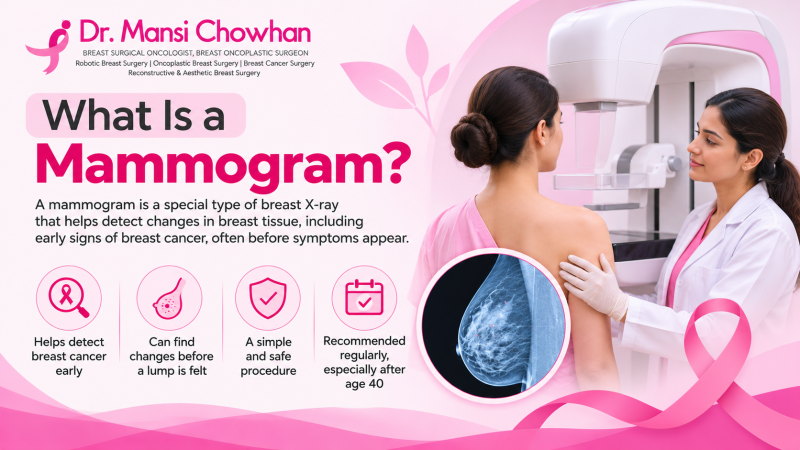
Some fibroadenomas are very small and cannot be felt by hand. They may only be noticed during an ultrasound or mammogram.
These features can suggest a fibroadenoma, but they cannot confirm the diagnosis. Other breast conditions can sometimes feel similar.
How Is Fibroadenoma Diagnosed?
First, the physician will conduct a physical exam of the breast area and inquire about the details regarding the lump, such as when it appeared and how its size has changed. Depending on the patient's age and clinical manifestations, different actions are to be taken.
- Ultrasound: Ultrasound is the most common technique used to evaluate a breast lump in young women. With ultrasound, the size and structure of the lump can be revealed.
- Mammography: A mammogram could be recommended depending on the age of the woman and clinical manifestations. Mammography utilizes low-dose X-rays to make pictures of the breast tissues.
- Core needle biopsy: In case the results of other tests are not sufficient, or the breast lump shows some peculiarities, a biopsy would be recommended. Biopsy involves taking a small tissue sample from the lump with a needle. Then, the sample is analyzed microscopically. This test helps confirm whether a lump is a fibroadenoma.
Biopsy is especially helpful when a biopsy needs to be conducted to analyze the pattern of the tissue.
Does Every Fibroadenoma Need to Be Removed?
No. Not all women with fibroadenomas need surgery.
Once an ultrasound and biopsy determine that a woman has a fibroadenoma and their results correspond to one another, the doctor may suggest monitoring rather than surgery. This could be done through physical exam or imaging, depending on the situation.
Removal is advised if:
- There is noticeable growth.
- It is big and/or alters the form of the breast.
- It is causing any pain or symptoms.
- Imaging and biopsy results differ from one another.
- There is a possibility that it may be another kind of lump, like a phyllodes tumour.
- The woman and her doctor feel that removal is the better choice.
It all depends on the patient’s overall condition and not only on whether or not she has lumps. There is no current surgical advice recommending removal of every biopsy-proven fibroadenoma without atypical features.
When Should a Breast Lump Be Checked?
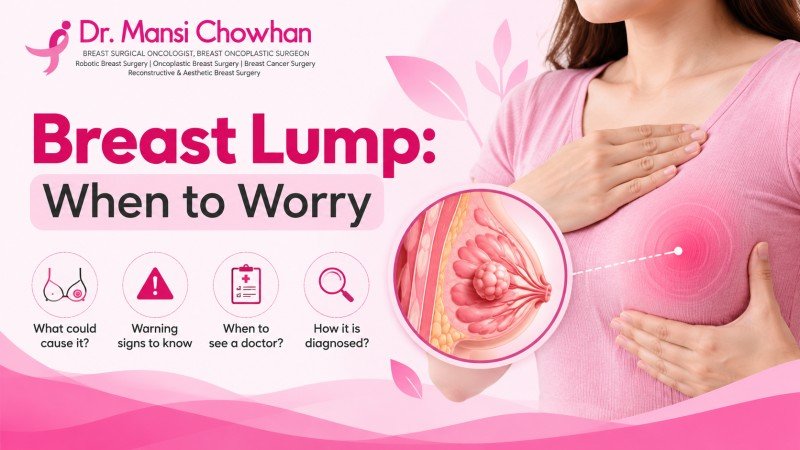
A new breast lump should be examined by a doctor, even if it feels smooth and moves under the skin. Do not rely on touch alone to decide whether a lump is harmless.
Medical evaluation is especially important if:
- A lump is growing or changing in shape.
- A new lump appears in the breast or underarm.
- There is a change in breast size or shape.
- The skin becomes dimpled, thickened or red.
- The nipple turns inward or develops an unusual change.
- There is bloody nipple discharge.
These signs do not always mean breast cancer, but they should not be ignored. A doctor can decide whether an ultrasound, mammogram or biopsy is needed.
Expert Breast Care and Surgical Treatment with Dr. Mansi Chowhan
Dr. Mansi Chowhan is a specialist in breast surgery with expertise in breast oncoplastic procedures and the management of breast conditions. As a Breast Oncoplastic Surgeon in Gurgaon, she provides evaluation and surgical care for patients with breast lumps and other breast-related concerns. Her qualifications include MCh Breast Oncoplasty (UK), fellowship training in Breast Surgery (Paris) and experience of more than 15 years.
For patients diagnosed with fibroadenoma, a consultation can help determine whether the lump requires monitoring, further investigation or surgical removal. Dr. Mansi Chowhan offers breast lump excision when clinically indicated, with consideration of the lump's characteristics and breast appearance during surgical planning.
Related Treatments
- Breast Lump Excision
- Radio-Guided Breast Surgery
- Breast Conservation Surgery
- Therapeutic Mammoplasty
- Breast Reconstruction
Conclusion
Most fibroadenomas tend to be benign tumors, and they rarely become cancerous. While simple fibroadenomas do not affect the risk of developing cancer in the future, complex fibroadenomas may require a more detailed investigation of the other tissue abnormalities that exist. The first and foremost thing to do is to diagnose it correctly without having to assume anything from the touch. If women develop new growths in their breasts, they should see a breast specialist. Dr. Mansi Chowhan, a breast cancer doctor in Gurgaon for over 15 years, can evaluate breast lumps.
Frequently Asked Questions
1. Is there a possibility that a fibroadenoma will become breast cancer after years?
It is highly unlikely. Fibroadenomas are generally harmless. A change in a lump, even after years, requires further examination to ensure that it is indeed the same and that no new breast problem has emerged.
2. Does a large fibroadenoma have a greater likelihood of being cancerous?
No. There is a possibility that a large fibroadenoma may still be harmless. Nonetheless, the lump which shows rapid growth or huge sizes must undergo further tests to confirm the condition and exclude the possibilities of other diseases such as phyllodes tumour.
3. Will fibroadenoma recur after the surgical procedure?
Generally, the fibroadenoma that has been removed does not regrow in the exact location. Nevertheless, a new fibroadenoma may emerge in the same breast or in the other breast.
4. Can a woman suffering from fibroadenoma develop breast cancer in the future?
Yes. Women who suffer from fibroadenomas cannot be safe from developing breast cancer because they do not provide any protection against it. However, most benign fibroadenomas will not pose any additional risks.
5. Is a biopsy necessary for every fibroadenoma?
No. There are some cases when the fibroadenoma has characteristic findings during the examination, and biopsy will not be needed. In cases with suspicious characteristics, the core needle biopsy will be prescribed by the physician.
6. Should fibroadenoma be surgically removed if it is not painful?
Not necessarily. A painless fibroadenoma should not necessarily be removed, depending on its size, growth pattern, and examination results.