

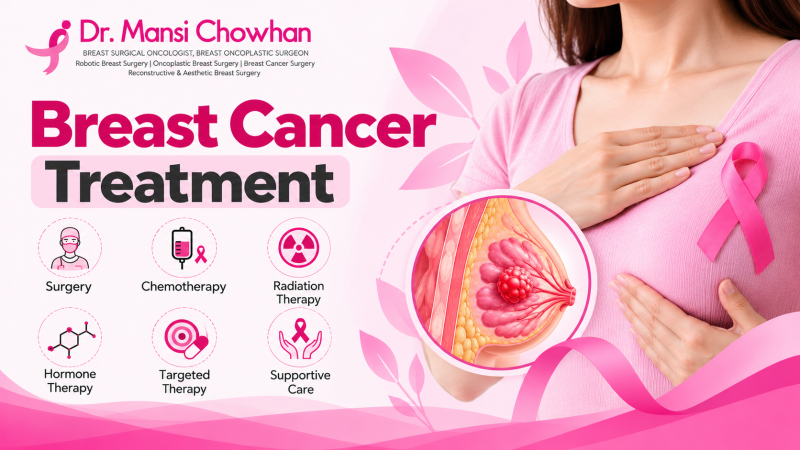
Breast cancer treatment depends on the stage, size, type, and hormone receptor status of the tumor, and typically combines local therapies (surgery and radiation) with systemic medications (chemotherapy, hormone therapy, and targeted therapy).
What Are the Different Types of Breast Cancer Treatment?
Breast cancer treatment may include surgery, chemotherapy, radiation, hormone therapy or other medicines. Some patients need just a few of these treatments, while others need a combination.
1. Breast Cancer Surgery
Surgery is often part of the cancer treatment. Ideally, the goal of any cancer surgery is to remove the cancer while sparing as much healthy tissue as possible.
There are two main types of surgery for breast cancer.
Breast-conserving surgery: also referred to as a lumpectomy, removes the cancer along with some healthy tissue and is often utilized if the cancer is an area that is localized.
Mastectomy: The surgery removes the entire breast and is utilized if the cancer is not localized and breast-conserving surgery is not an option.
As previously mentioned, the decision about the type of surgery used is determined by many factors. Removing the entire breast is not always needed if there is cancer present.
2. Chemotherapy for Breast Cancer
Chemotherapy treatment involves the use of drugs that either destroy cancer cells or prevent their growth. This treatment can involve the use of drugs via an intravenous route or in the form of tablets, depending on the type of drugs used.
The treatment can be administered before surgery to reduce the size of the tumour or after surgery to minimize chances of recurrence of cancer.
Chemotherapy is not required for all patients. The doctor will determine the need for this treatment based on the type and stage of the cancer, together with other test results.
Tiredness, vomiting, hair loss, and reduced immunity against infections are among the common side effects of the treatment.
3. Radiation Therapy
Radiation therapy employs beams of energy to destroy cancer cells in the targeted region.
This type of treatment is used following breast conservation surgery to target the remaining cancer cells in the breast. In some cases, radiation treatment is administered following a mastectomy, based on the size of the cancer and if it has spread to nearby lymph nodes.
A number of sessions will be required for treatment. The exact number will depend on the treatment regimen chosen.
Skin irritation and fatigue can occur while undergoing this procedure.
4. Hormone Therapy
There are breast cancers that depend on hormones like oestrogen for their growth. They are referred to as hormone receptor-positive cancers.
Hormone therapy will serve to inhibit the impact of these hormones in the body or decrease the levels of the hormones produced by the body. This treatment option will either follow surgery to reduce the possibility of recurrence of cancer or even be used when the cancer has spread in the body.
This treatment can last for several years depending on the type of cancer and whether the patient has undergone menopause.
5. Targeted Therapy
Some breast cancer cells produce particular proteins or gene alterations, which help in the development of these cells. This treatment method involves the use of medications that target particular characteristics.
For instance, women who have HER2-positive breast cancer are supposed to undergo treatment using medications that target the HER2 protein. Targeted therapy may be used together with other therapies depending on the stage of cancer.
However, targeted therapy may not be suitable for all patients. Tests on the cancerous tissues are important in determining the suitability of the therapy.
6. Immunotherapy
Immunotherapy boosts the body’s natural ability to spot and destroy cancer cells.
It can be considered for some patients suffering from triple-negative breast cancer, which lacks oestrogen and progesterone receptors and does not have a high HER2 score.
Immunotherapy is not a necessity in all cases of breast cancer. The oncologist examines the type of cancer and its other characteristics and then decides about using it or not.
How Do Doctors Decide Which Breast Cancer Treatment Is Needed?
Two women can have breast cancer and still need different treatments. The plan depends on several things.
- Stage of cancer: This tells the doctor how large the cancer is and whether it has spread to nearby lymph nodes or other parts of the body.
- Type of cancer: Some breast cancers grow in response to hormones, while others have different features.
- Test results: Tests for hormone receptors and HER2 help show which medicines may work.
- General health: Other illnesses and the patient's ability to manage treatment are also considered.
- Personal needs: The doctor discusses the available options, possible side effects and the patient's preferences.
The treatment plan may change as more results become available or as the cancer responds to treatment.
Is Breast Cancer Treatment Different at Each Stage?
Yes. The stage of breast cancer helps doctors decide which treatments are needed.
Early-stage breast cancer: Surgery is often the main treatment. Radiation or medicines may follow, depending on the test results.
Locally advanced breast cancer: When the cancer is larger or has reached nearby tissues or lymph nodes, chemotherapy or other medicines may be given before surgery. Surgery and radiation may follow.
Advanced breast cancer: If the cancer has spread to distant parts of the body, treatment usually focuses on controlling its growth, easing symptoms and helping the patient live as well as possible. Hormone therapy, targeted therapy, chemotherapy or other medicines may be used.
These are general examples. The treatment plan depends on the individual case, not just the stage.
Can the Breast Be Rebuilt After Cancer Surgery?
Yes. Some women go for breast reconstruction surgery after having their breast removed through a mastectomy operation. The purpose of this surgery is to restore the breast's appearance using implants, the body's tissues, or both.
There is also an alternative known as oncoplastic breast surgery. This involves combining cancer removal surgery and procedures that help maintain the breast's shape or reconstruct it.
This may be done in some cases of breast-conserving surgery based on the size and location of the cancer. Not all women need or wish to go for this kind of surgery.
What Should You Expect During Breast Cancer Treatment?
The process can be time-consuming, and everyone’s experience is unique. Women who go through a surgical procedure can recover in a few weeks; however, it takes some extra time for others.
During this time, follow-up visits will help your doctor monitor your recovery process and deal with any possible side effects. Good nutrition, proper rest, and assistance when needed can make your everyday routine easier.
Another thing that you may experience at this stage is concern about what is going to happen next. Do not hesitate to ask your doctor to clarify everything that you do not understand.
Why Choose Dr. Mansi Chowhan?
Choosing the right specialist is an important step when considering breast cancer treatment. Patients benefit from a clear understanding of their diagnosis, available surgical options and how different treatments may fit into their overall care plan.
Dr. Mansi Chowhan is a breast surgical specialist whose website highlights her expertise in breast oncoplastic surgery and breast cancer procedures.
As a Breast Oncoplastic Surgeon, Dr. Mansi Chowhan provides surgical care for selected breast conditions, with an approach that considers appropriate cancer removal and breast shape where clinically suitable.
Reasons to consider a consultation include:
- Specialised breast surgery: Assessment for appropriate surgical options based on the diagnosis and investigation results.
- Breast conservation options: Evaluation for breast-conserving procedures when suitable.
- Oncoplastic techniques: Consideration of breast reshaping techniques alongside cancer surgery when clinically appropriate.
- Reconstruction planning: Discussion of breast reconstruction options when mastectomy or other breast surgery is required.
- Individualised treatment discussions: An opportunity to understand the proposed procedure, its potential benefits, limitations and alternatives.
Breast cancer treatment may also require collaboration with medical and radiation oncologists. The appropriate care plan depends on the cancer's characteristics and the patient's individual needs.
Related Treatments
The following are related surgical services listed on Dr. Mansi Chowhan's website:
- Breast Conservation Surgery
- Modified Radical Mastectomy
- Breast Reconstruction
- Therapeutic Mammoplasty
- Radio-Guided Breast Surgery
- Breast Lump Excision
Conclusion
Breast cancer treatment has many options, but not all of them may be required for everyone. Treatment with surgery, radiotherapy, and medicine can either be done singly or together, based on the type of cancer and the results of the test. The most important thing at this stage is to know the diagnosis and be aware of the different options that are available. Dr. Mansi Chowhan, an Expert Oncoplastic Breast Surgeon, has been doing surgical oncology for more than 15 years.
Frequently Asked Questions About Breast Cancer Treatment
Can breast cancer be treated without surgery?
Not everyone requires surgery. Some patients may be treated with medicines instead, particularly if the cancer has spread and surgery is not considered safe. However, surgery is one of the main treatments for people with early-stage breast cancer.
Does every breast cancer patient need chemotherapy?
No. The need for chemotherapy is dependent on the type and the stage of the cancer and the result of certain tests. For some, hormone therapy or other targeted medicines may be more beneficial.
How long does breast cancer treatment take?
Treatment can take a few weeks to a few months. Breast cancer treatment may include surgery, which can take a few weeks to recover from. Radiation treatment can take just a few days to a few weeks. Other treatments such as hormone therapy and chemotherapy can take a few months to years, depending on the treatment plan.
Can breast cancer come back after treatment?
Yes, breast cancer can return after treatment. The doctor will want to see you a few times a year to check your recovery.
Will I lose my breast after breast cancer surgery?
Not always. Some women can keep most of their breast by having a surgery that removes only the cancer (breast-conserving surgery). Others may have to have a mastectomy. Your surgeon can go over your options in more depth.