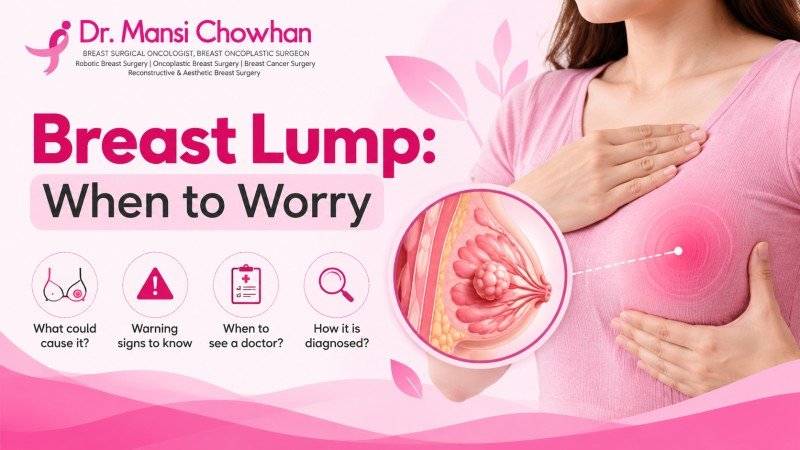



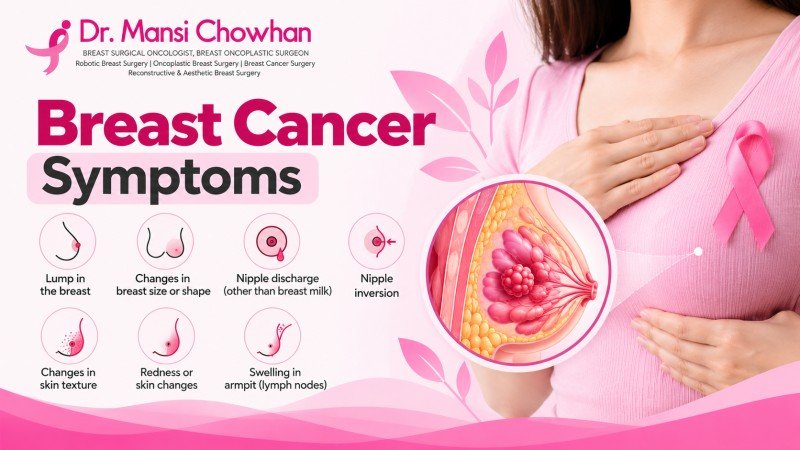
The most common symptom of breast cancer is a new lump, mass, or thickened area in the breast, upper chest, or armpit.
What Are the Early Symptoms of Breast Cancer?
The signs of breast cancer are not the same for everyone. Some women notice a lump, while others see a change in the skin or nipple first. A few may not notice any symptoms in the early stages.
Here are the changes to look out for.
1. A Lump in the Breast
Another sign of breast cancer is a new lump. Such a lump is usually hard or different from the surrounding tissues. Some lumps are immobile, which means that they cannot be shifted easily by hand.
However, not all breast lumps are cancerous. They could be cysts and other benign formations. The issue is that they cannot be distinguished just by palpation.
Therefore, when you notice any new lump in your breast, see a doctor.
2. A Change in Breast Size or Shape
Having one breast bigger than the other is quite common. However, what matters is the occurrence of a new change.
You can observe that one breast seems bigger, puffy, or even changes shape. At times, it can be only a certain area of the breast that changes its appearance.
Do not disregard such a change when you cannot explain its cause.
3. Changes in the Skin of the Breast
Look at the skin as well as the shape of your breasts. Breast cancer can sometimes cause changes that are easy to miss at first.
Watch for:
Skin that looks pulled inward or has small dents.
Redness or a darker colour than usual.
Skin that feels thicker than before.
Swelling that does not go away.
A rough, orange-peel-like appearance.
These changes can also happen with infections and other breast problems. Still, new skin changes should be checked, especially if they continue or become worse.
4. Changes in the Nipple
The nipple can also show early signs of a problem. You may notice that it looks different from before or that the skin around it has changed.
Pay attention if:
The nipple starts turning inward.
Blood or other fluid comes out without squeezing it.
A rash develops on or around the nipple and does not go away.
The nipple becomes sore or develops a wound that does not heal.
Some women naturally have nipples that turn inward. That is not the same as a nipple that has recently changed. A new change needs medical attention.
5. Swelling or a Lump in the Armpit
Some types of breast cancer may spread into the lymph nodes in the underarm area. Lymph nodes are small glands that play an important role in fighting off infections.
There might be a lump in the underarm area without feeling any lump in the breast tissue itself.
A lump in the armpit area may also arise due to infection or some other benign issue. However, if it is new or persistent, it should be investigated.
6. Breast Pain That Does Not Go Away
Breast pain alone does not indicate the presence of breast cancer. Hormonal imbalance, menstruation, and breast cysts are the more likely causes of breast pain.
However, do not disregard persistent pain, recurring pain, and pain associated with lumps and other breast changes, as a doctor may be able to determine the cause.
Breast cancer can also present itself in the absence of pain. Thus, do not rely solely on pain as an indicator of breast problems.
Can Breast Cancer Develop Without Any Symptoms?
Yes. Early-stage breast cancer doesn't always result in the formation of a lump or any pain. It doesn't mean that when you feel fine, you are healthy; you could still suffer from breast cancer.
This is why early detection of the disease is important. Sometimes, changes can be seen on the mammogram but not felt through self-examination.
Breast screening and testing for a new problem are two different things. If you feel something unusual, don't wait till your next screening; go and see a doctor.
Do Breast Cancer Symptoms Always Mean Cancer?
No. Most changes that affect the breasts are not related to any form of cancer.
A lump might be a cyst or fibroadenoma, while pain and swelling might be associated with one’s menstrual periods. Redness and tenderness may be a result of an infection.
Despite all this, there is no way of knowing the underlying cause just by looking at the symptoms. The patient will be required to undergo a physical examination, and an ultrasound, mammogram, or even biopsy will be recommended by the doctor. A biopsy involves removal of a tissue sample to test for the presence of cancer cells.
A lump examination does not necessarily imply that one has cancer.
When Should You See a Doctor?
Book an appointment if you find any unusual changes in your breast or any unusual lumps in your breast.
Don’t wait for the lump to develop more or become painful. In addition, don’t assume that it is benign just because there is no family history of breast cancer.
Consult the doctor immediately if you have:
An unusual lump in your breast or underarm area.
A change in the appearance or size of your breast.
Dimpled skin on your breast or skin that looks puffy and thicker than before.
Recent inversion of the nipple.
Discharge from your nipple that is blood-stained.
An unusual change in the breast that persists or progresses.
Visit a doctor immediately if your breast becomes reddened, hot, and inflamed, particularly if there is fever or severe pain. It can be an infection.
How Can You Notice Breast Changes Early?
There is no need to have a complex examination of your breasts.
While taking a bath or dressing, pay attention to how your breasts look and feel. You may also look at your breasts in the mirror. Any new lump, changes in skin, nipples, and any swellings in the armpits should be noticed.
It is normal to experience changes in the breast before the period, during the pregnancy and lactation periods. However, these are natural changes, and you should not consider all new lumps and changes hormonal.
In case of changes, make an appointment with the doctor. Self-examination of the breasts may help you to identify changes, but it will not allow you to determine whether the lump is malignant or not.
Myth vs Reality: Common Beliefs About Breast Cancer Symptoms
Myth: Breast cancer always causes a lump.
Reality: A lump is a common sign, but breast cancer can also cause changes in the skin, nipple, or shape of the breast. Early breast cancer may not cause noticeable symptoms.
Myth: If there is no pain, there is nothing to worry about.
Reality: Breast cancer can develop without pain. A new lump or other unusual change needs attention even if you feel fine.
Why Choose Dr. Mansi Chowhan?
When you notice a breast lump or changes in your breast, consulting an experienced specialist can help you understand the possible causes and determine the next steps.
Dr. Mansi Chowhan is a breast surgical specialist whose website highlights her expertise in breast oncoplastic surgery, breast cancer surgery and related breast procedures.
As a Breast Oncoplastic Surgeon, Dr. Mansi Chowhan focuses on surgical management of breast conditions, including appropriate breast cancer procedures that aim to address the disease while considering breast shape and appearance where clinically suitable.
Reasons to consider a consultation include:
- Specialised breast surgical care: Evaluation and surgical management of selected breast conditions.
- Breast conservation options: Assessment for breast-conserving procedures when clinically appropriate.
- Oncoplastic surgical approaches: Consideration of techniques that combine tumour removal with breast reshaping in suitable patients.
- Individualised treatment planning: Recommendations based on the diagnosis, investigations and patient's circumstances.
- Discussion of reconstruction: Guidance about breast reconstruction options when mastectomy or other breast surgery is required.
The appropriate treatment depends on the specific diagnosis and clinical findings. A consultation can help clarify which investigations or treatment options may be suitable for you.
Related Treatments
- Breast Conservation Surgery
- Modified Radical Mastectomy
- Breast Reconstruction
- Therapeutic Mammoplasty
- Radio-Guided Breast Surgery
- Breast Lump Excision
Conclusion
A small difference could easily be overlooked, particularly if there are no symptoms associated with it. Changes such as a lump, as well as any changes in the skin or nipples, could be noticed and might look different from how they normally would. These are not signs of cancer for sure, but should be looked at further just in case.
When you notice a difference, you should go to your doctor right away rather than wait to see if it resolves itself on its own. Dr. Mansi Chowhan, Expert Oncoplastic Breast Surgeon, has more than 15 years of experience in the field of surgical oncology.
Frequently Asked Questions About Breast Cancer Symptoms
What is the earliest symptom of breast cancer?
The earliest symptom for most women with breast cancer is the presence of a new breast lump. In some cases, women may experience a change in the skin, nipple, or shape of the breast. However, some forms of early breast cancer may not have any observable symptoms.
Is breast cancer always painful?
No. Breast cancer may develop without pain. It is still important to visit the doctor even when there is a painless breast lump.
Can breast cancer result in nipple discharge?
Yes. Breast cancer may lead to nipple discharge, especially when the fluid discharged is bloody or without any form of squeezing of the breast.
Is it possible for young women to have breast cancer?
Yes. Breast cancer occurs more often as one ages; however, young women may have it as well. Do not rule out a breast lump simply based on being young.